
Wireless communication moves information between devices without a continuous cable. Most systems use radio waves, but infrared and visible light can also carry data. The useful differences are not simply speed or age. Each method makes a different trade-off between range, power use, capacity, mobility, cost and resistance to obstacles.
A phone may use one link for headphones, another for local internet access and a wide-area network while travelling. A remote sensor may send only a few bytes each hour but need years of battery life. Understanding the categories helps with selection and troubleshooting.
How wireless links work
A transmitter converts information into an electromagnetic signal, which a receiver detects and reconstructs. Frequency describes how rapidly the wave cycles; bandwidth describes the frequencies available to a transmission. Wider channels can carry more data when signal quality and spectrum rules permit.
Lower radio frequencies generally travel farther and pass through obstacles more effectively. Higher frequencies can offer more bandwidth, but walls, foliage, rain and distance may weaken them more quickly. Antenna position, direction and height also matter. The principles behind these trade-offs are covered in Fundamentals of wireless communication.
Signals reflect from surfaces, bend around edges and overlap with other transmissions. A link that works in an open room may fail behind concrete, metal shelving or machinery. Test in the intended environment instead of relying on a published maximum range.
Short-range and personal communication
Bluetooth and similar personal-area links
Personal-area networks connect devices around one person or within a room. Bluetooth is commonly used for audio, keyboards, controllers, wearables and small sensors. It supports direct device pairing and can use relatively little power. Low-energy modes suit brief, occasional messages; continuous audio or frequent transfers need more energy and radio time.
These links do not replace a building network. People, walls, equipment and a crowded radio band can reduce range or cause delays. Pair only with the intended device, reject unexpected requests and remove unused pairings.
NFC and RFID
Near-field communication works across a very short distance, usually when a card, tag or device is brought close to a reader. It suits deliberate actions such as access checks, ticket validation and device setup. The short range limits accidental connections but does not remove the need for authentication or secure handling of the data exchanged.
Radio-frequency identification uses tags and readers to identify objects. Passive tags draw energy from the reader; active tags have a power source and can work over longer distances. RFID suits inventory, access control and asset tracking, but is not a general data network.
Infrared and optical links
Infrared communication uses light outside the visible range. It is familiar in hand-held remote controls and can also support short data links. It usually needs a clear or reflected path between transmitter and receiver. This confinement reduces radio interference and can keep a signal within one room, but solid obstacles interrupt it.
Local and building-wide networks
Wi-Fi
Wi-Fi forms a wireless local-area network through one or more access points. It suits computers, phones, media devices, cameras and other equipment that needs substantial local capacity. Access points normally connect to a wired router or switch, so the quality of both the wireless link and the backhaul affects the result.
Lower-frequency Wi-Fi bands tend to offer better reach through walls, while higher-frequency bands provide more channel space over shorter distances. A wider channel can increase peak throughput, but it also occupies more spectrum and may overlap with nearby networks. In a busy building, several carefully placed access points with sensible channel settings often outperform one unit transmitting at maximum power.
Place access points in open, central positions rather than inside cupboards or beside large metal objects. Use current encryption, a unique passphrase and separate access for untrusted or guest devices. Government Wi-Fi network security guidance gives a useful baseline for configuration and monitoring.
Mesh sensor networks
Low-power mesh systems let intermediate devices relay messages towards a coordinator or gateway. This can extend coverage around corners and through a building without requiring every sensor to reach one central radio. The design suits lighting controls, environmental sensors and building automation, where messages are small and battery life matters more than high throughput.
Each mesh relay must be positioned and powered appropriately, and too many hops can add delay. Planning must account for other systems in the same band. Video needs a network designed for sustained capacity.
Wide-area communication
Cellular networks
Cellular systems divide a region into areas served by base stations. Devices can move between cells while the network manages identity, routing and radio resources. The underlying Cellular network architecture supports voice, messaging, mobile internet access and remote equipment across a much larger area than a local network.
Coverage depends on terrain, buildings, frequency, network loading and the radio fitted to the device. A strong outdoor signal does not guarantee indoor service, particularly below ground or inside metal structures. Before selecting cellular connectivity for equipment, confirm supported frequency bands, expected service life, data needs and performance at every intended location.
Fixed wireless and microwave links
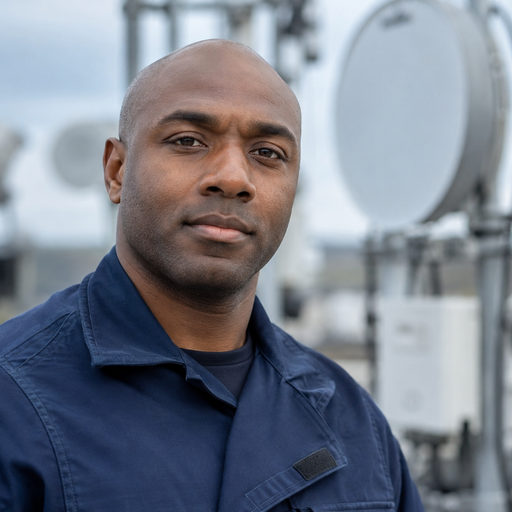
Fixed wireless connects stationary points, often with directional antennas on roofs, poles or towers. It can link separate buildings, provide backhaul or reach premises where a cable is impractical. Directional antennas concentrate energy along the path, improving range and reducing unwanted reception from other directions.
Higher-capacity microwave links often need clear line of sight. Trees, new construction and antenna movement can degrade them. Planning should cover mounting strength, weather exposure, spectrum authorisation, surge protection and safe routes for cables.
Low-power wide-area networks
Low-power wide-area systems carry small messages from dispersed sensors over longer distances than personal or building networks. They suit meter readings, environmental measurements and status reports that are sent occasionally. Long sleep periods and short transmissions can preserve battery life, but the trade-off is limited throughput and restricted opportunities to send data back to the device.
Do not choose this category for live audio, video, frequent location updates or large software downloads. Estimate the complete message size, reporting interval, acknowledgement traffic and likely retries. A weak signal can consume more energy than expected because the device transmits repeatedly or at greater power.
Satellite communication
Satellite links cover remote land, sea and air where terrestrial infrastructure is absent. Higher-orbit systems provide broad coverage with greater delay; lower-orbit systems reduce delay but rely on moving satellites and suitable ground equipment. Both need a usable view of the sky, and buildings, terrain, foliage or weather can obstruct some links.
Satellite-to-device services may support limited messages or wider data connections, depending on the system and terminal. They supplement rather than replace terrestrial networks. Capacity, antenna requirements, power use and regulatory permission must be checked for the actual location. Engineers use research such as Wireless channel-model research for 5G and beyond to understand how propagation conditions affect advanced terrestrial and satellite-connected systems.
How to choose a wireless system
Start with the traffic rather than the technology name. Record what each device sends, how often it sends it and how quickly a response must arrive. A temperature reading, a voice call and a video stream have very different requirements. Include protocol overhead, software updates and peak demand, not only the normal payload.
Inspect distance, walls, floors, metalwork, moving machinery, outdoor exposure and interference. Decide whether devices remain fixed or move between coverage areas. Test weak locations under realistic load. Define how the system should report an outage or continue locally.
Power and infrastructure narrow the options further. Mains-powered access points can provide capacity for many devices, while a sealed battery sensor needs long sleep periods and brief transmissions. A wide-area service may reduce local infrastructure but creates dependence on external coverage. A private network requires gateways, cabling, maintenance and secure administration.
Finally, review security across the whole operating life. The link should encrypt data, authenticate devices and support safe key replacement. Change default credentials, restrict administrative access, separate devices according to risk and keep firmware maintained. Where safety or essential operations depend on wireless service, use independent fallback communication or a defined manual procedure.
Practical selection checklist
- Coverage: Measure the real path, obstacles and weak-signal areas.
- Capacity: Calculate typical and peak traffic for all devices.
- Delay: Set the longest acceptable response time for each task.
- Power: Include sleep time, retries, scanning and software updates.
- Mobility: Confirm whether connections must survive movement between coverage areas.
- Security: Require encryption, device authentication and maintainable software.
- Resilience: Plan for interference, service loss and equipment failure.
A small trial should reproduce the intended locations, device count and traffic pattern. Record signal quality, failed messages, delay and power use over enough time to reveal intermittent problems. That evidence provides a sound basis for deployment and exposes trade-offs that specification sheets cannot show.